
The 2026 Dodge Durango SRT Hellcat is the quickest and most powerful gas-powered SUV out there. For most shoppers, that’s all the reason they need to park one in the driveway. Fifteen years since the last overhaul, the Durango has seen a few minor upgrades, but when it makes headlines, it’s usually because Dodge has turned up the performance dial again.
Outside its excellent performance and in-city practicality, however, there’s only so much about the new Durango SRT Hellcat that appeals to modern drivers who care about looks and tech features. Find more details about the midsize crossover below.
American Practical Excellence
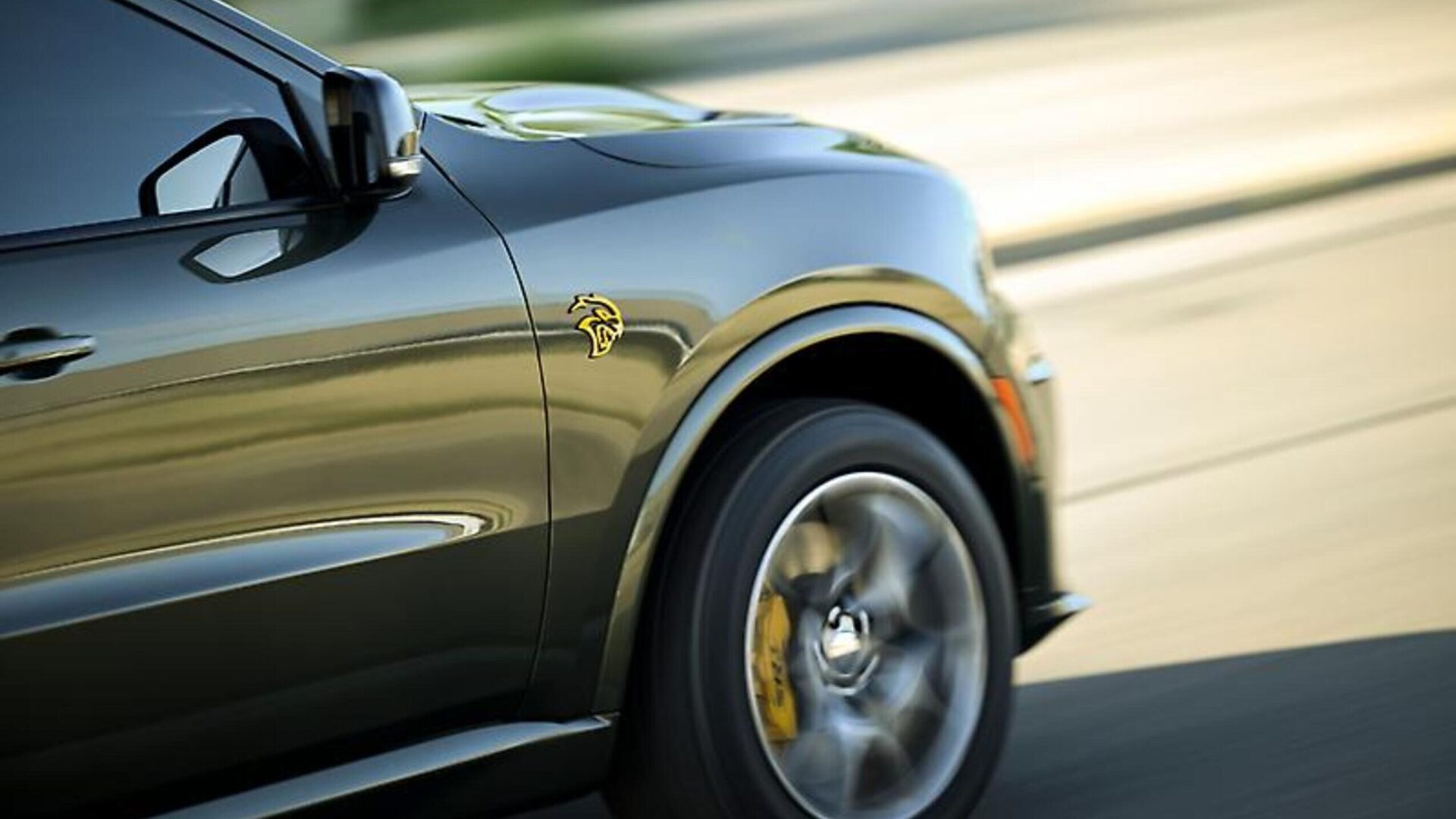
The Durango has forged its own path as a performance-focused hauler designed for everyday use. It uses a 6.2-liter HEMI V8 engine supercharged to deliver 710 horsepower and 645 lb-ft of torque, which pushes the SUV into the supercar region. The Hellcat accelerates from 0 to 60 mph in 3.5 seconds and boasts a top speed of 180 mph. Though city streets rarely need such blazing speed, the Hellcat has what it takes to leave it all on cross-country trips.
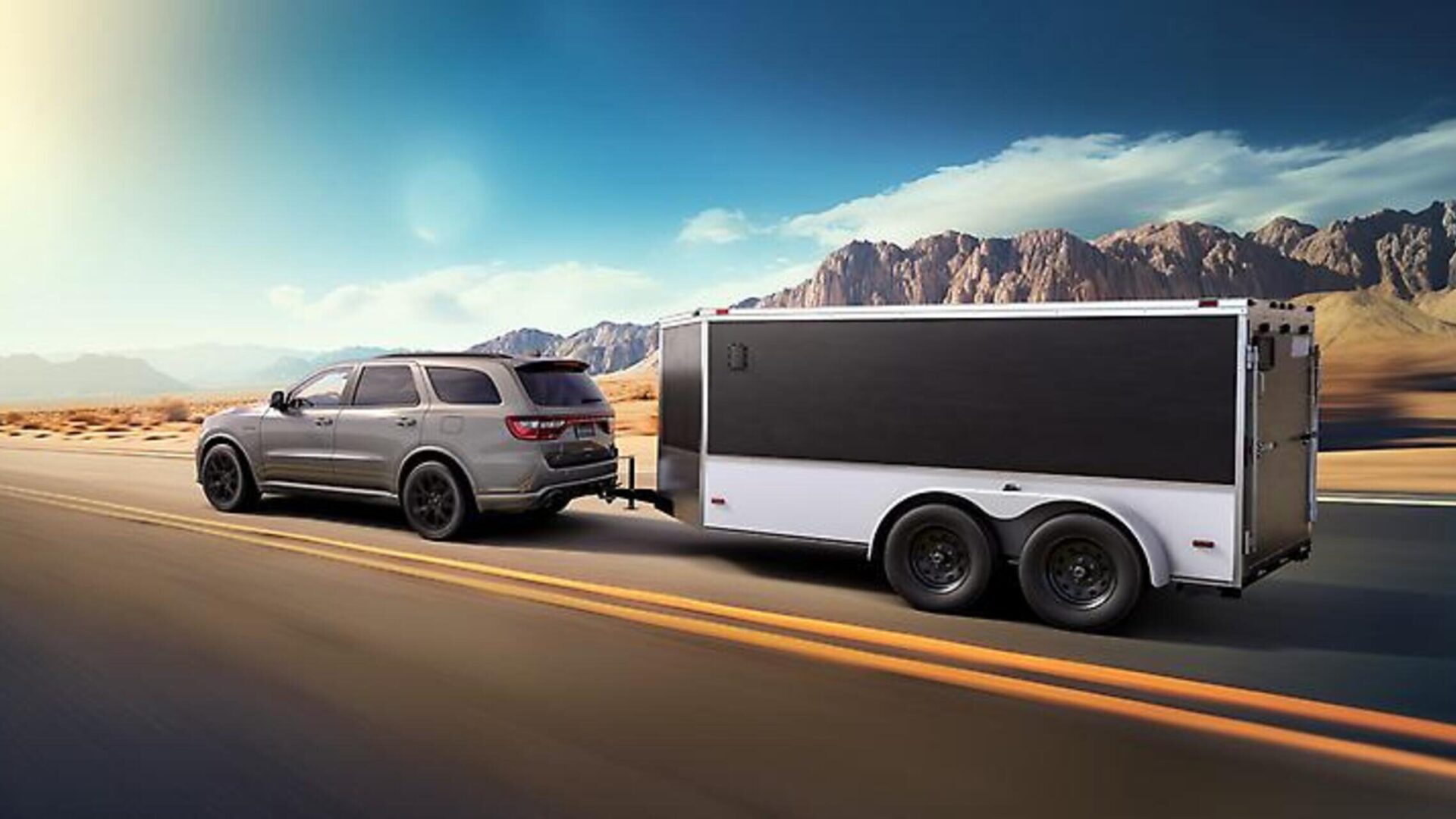
Considering the SRT Hellcat’s size and speed, attention naturally shifts to brake response, and the SUV doesn’t disappoint. It uses a Brembo® performance brake that responds promptly and stops from 70 mph in about 165 ft. The all-wheel drive and an 8-speed auto transmission system team up to help drivers get the most out of available modes, from Sport to Snow. Fuel efficiency is low but forgivable for a three-row performance gas SUV. Plus, when duty calls, the Durango’s 8,700 towing capacity suffices for most hauling tasks.
Looks? Not So Much
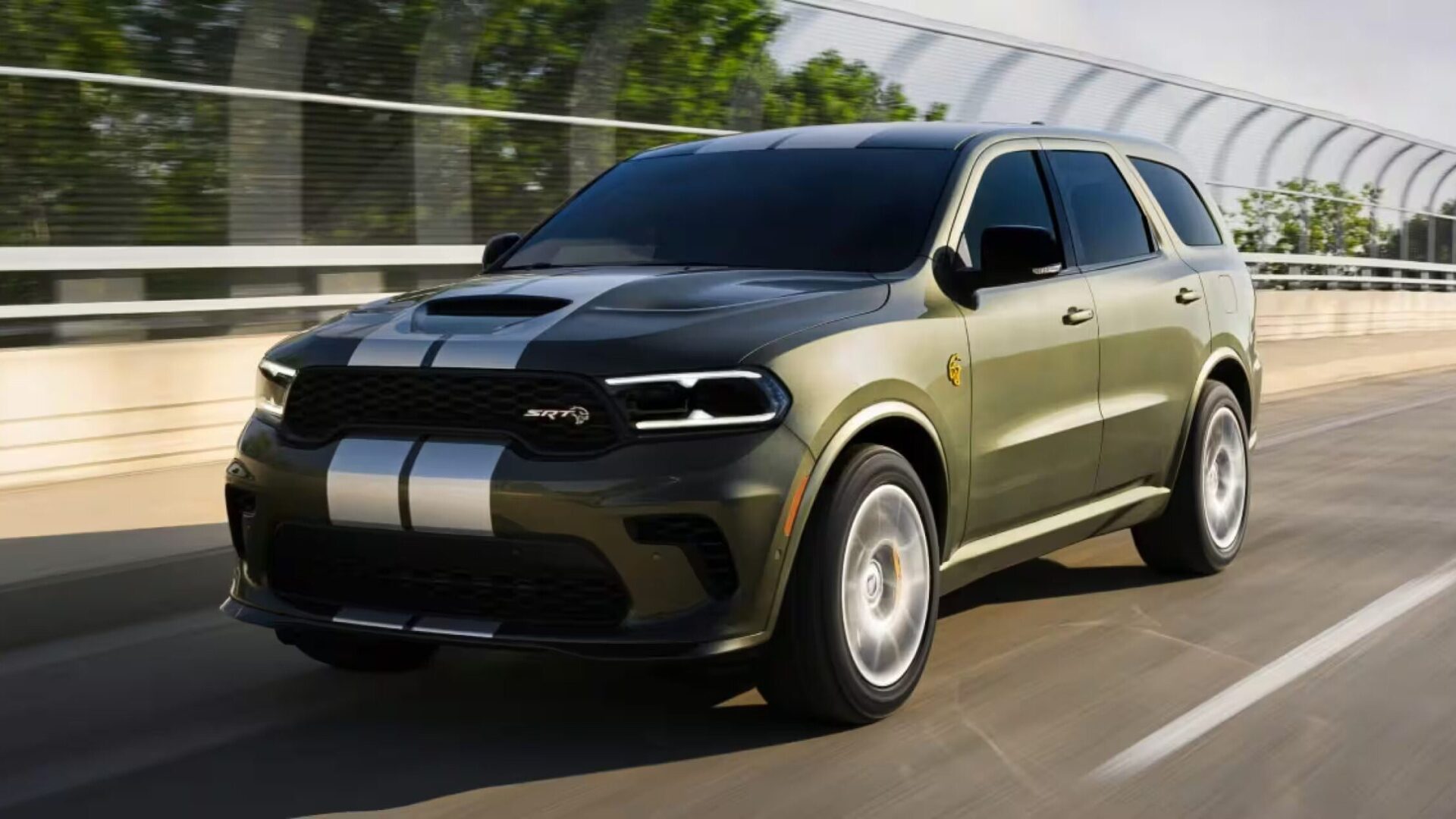
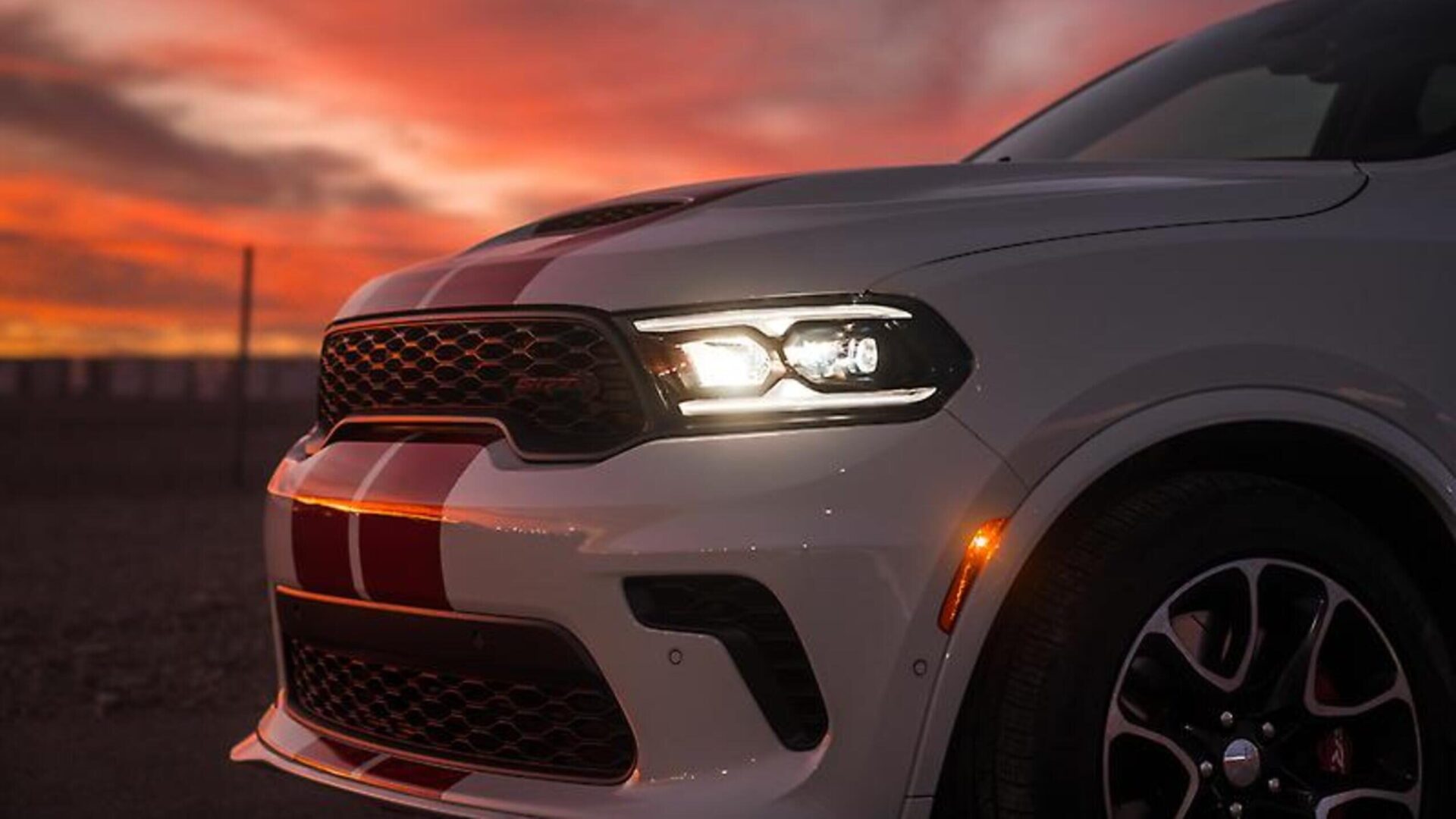
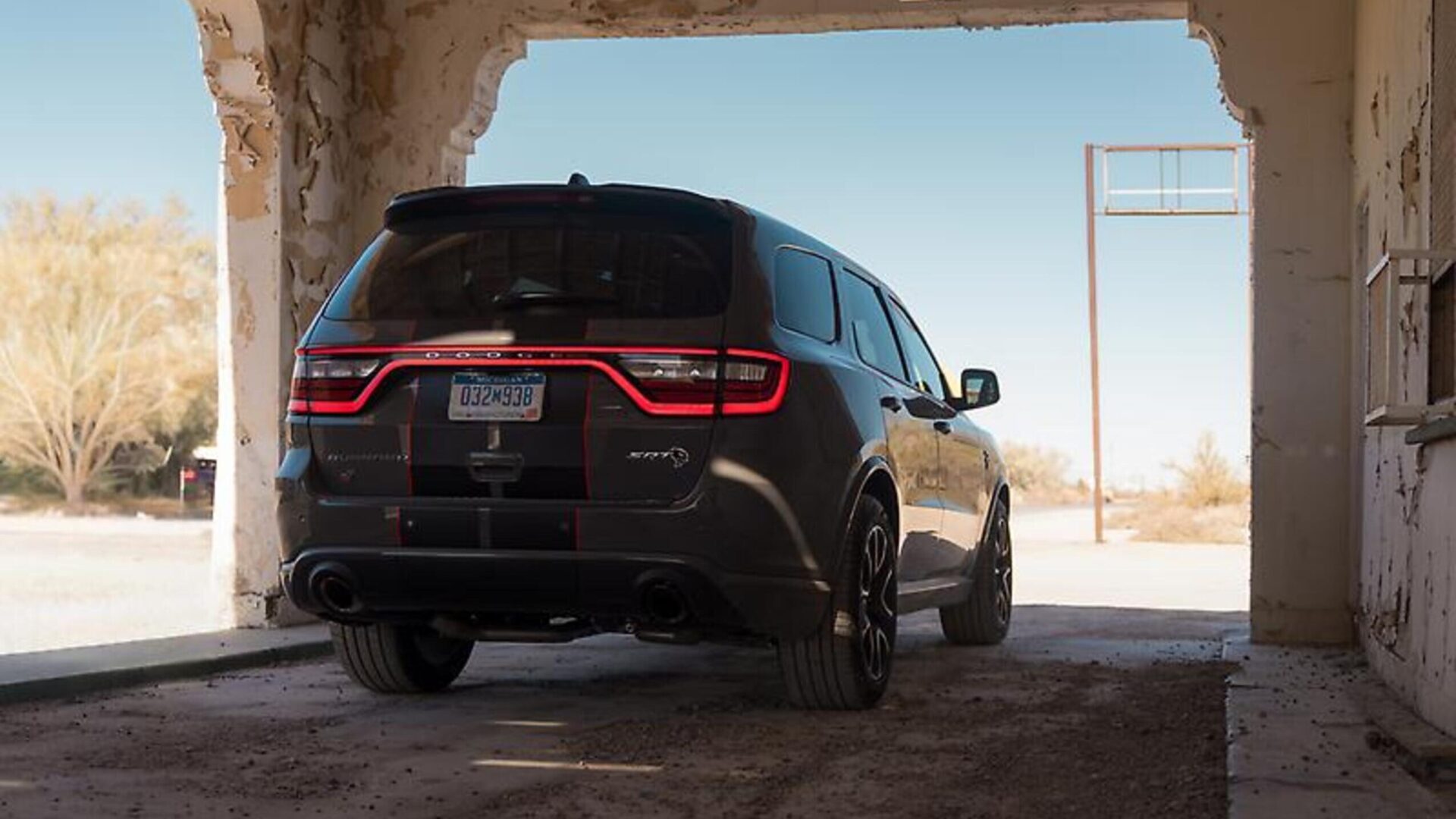
Durango has always cared more about doing the job than turning heads, so it’s no surprise that the latest Hellcat sticks to the same formula. It wears a gloss-black grille with large openings and heat extractors. Rather than fog lamps, the Hellcat uses a chin splitter and lower air intakes to manage heat from the supercharged engine. The sculpted hood, body lines, and 20-inch wheels project a wide-stance, muscular SUV built to perform.
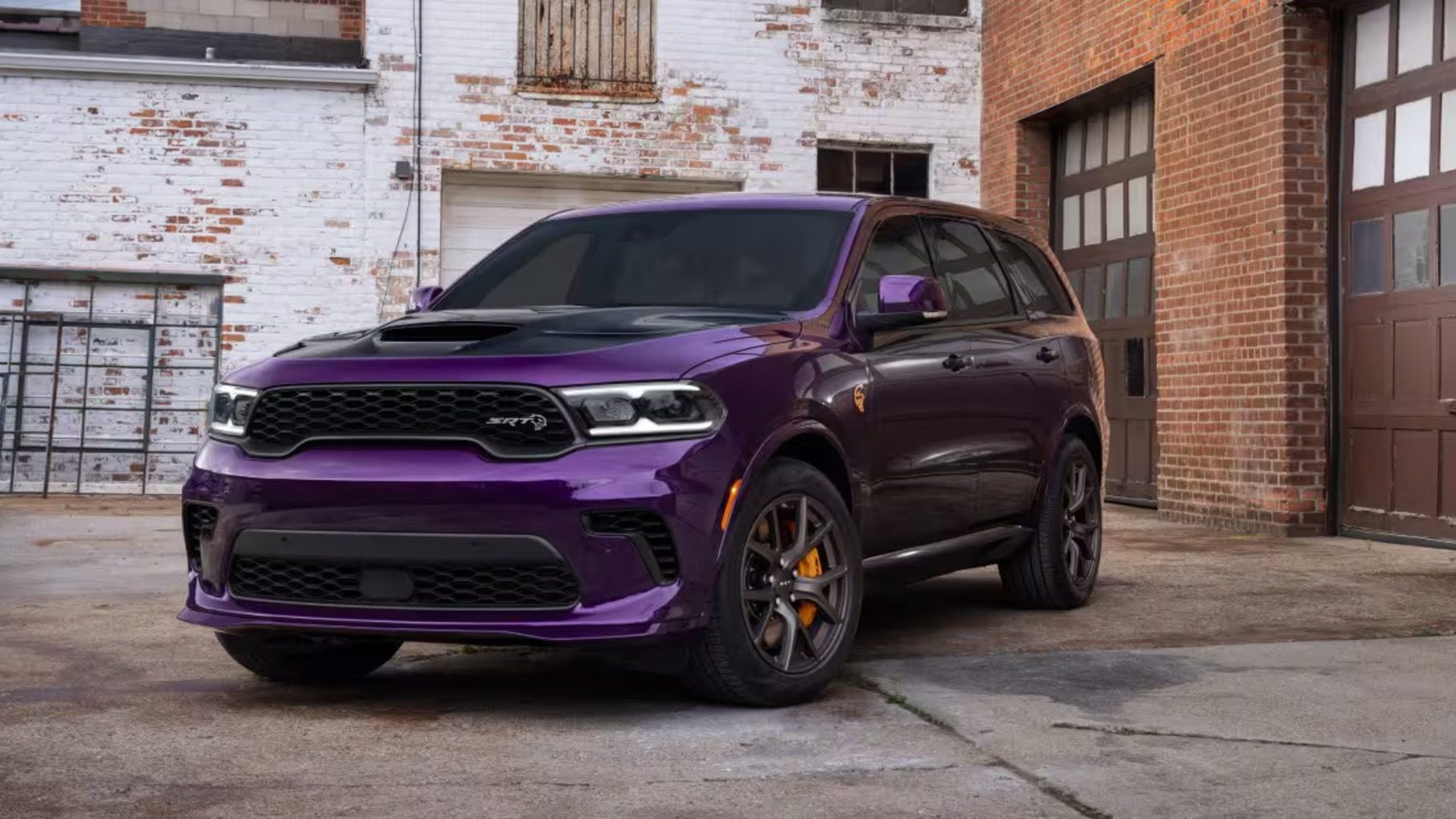
Away from the performance-focused design, Dodge has introduced new paint options, so style-conscious buyers can tune the SUV to their taste. Shoppers can now customize hood stripes, wheel style, and badge colors on the Jailbreak Edition. The Hellcat’s appearance has levelled up, but it’s still far from a stunner, especially when modern crossovers like the Mazda CX-90 flex futuristic looks for free.
Relate:
2024 KIA Telluride is a Solid Attempt at Redemption
Comfy Seats for Premium Experience
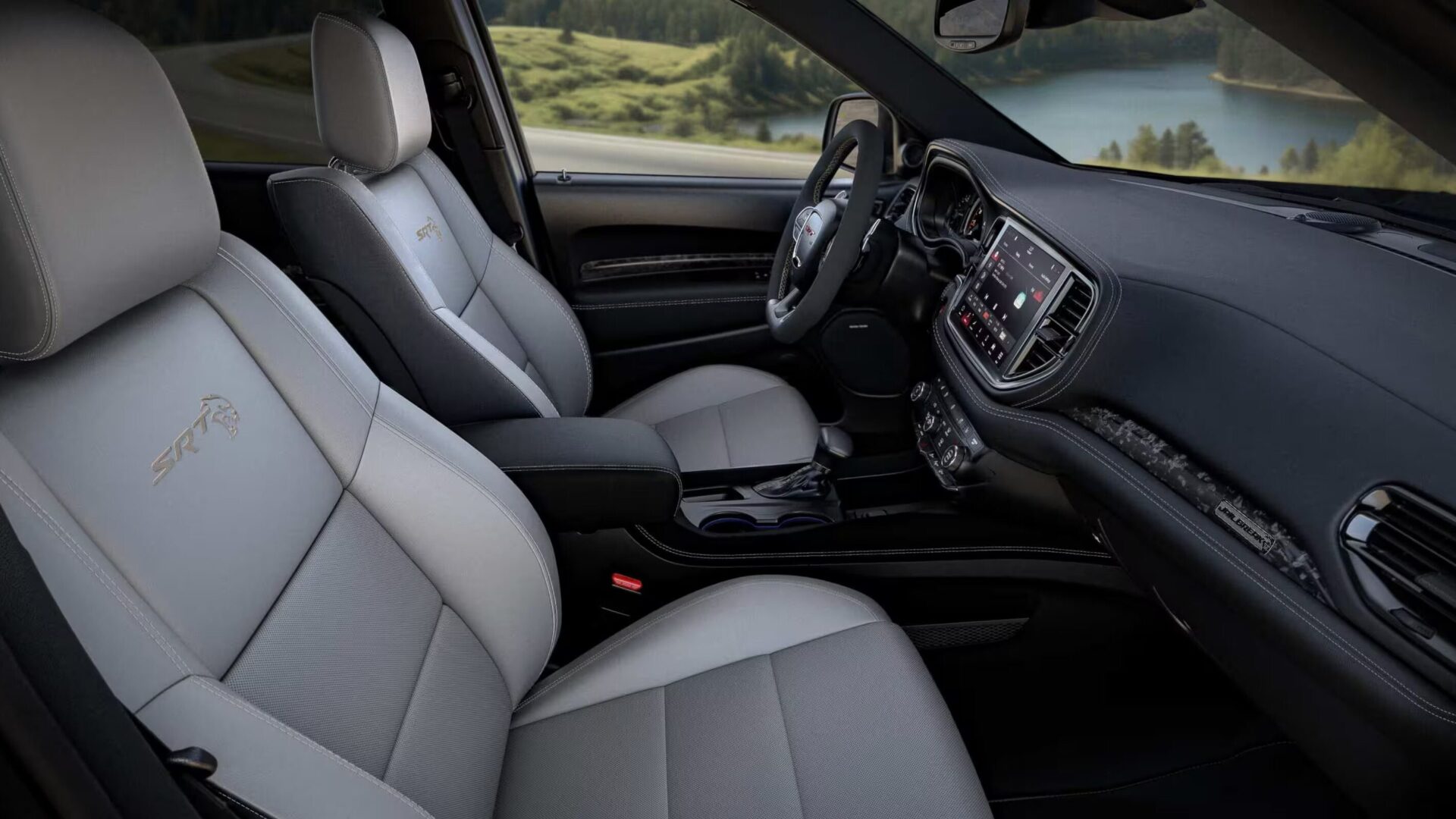
Inside the SRT Hellcat is a mix of luxury and performance elements. All seats are heated and ventilated and covered in Nappa leather with soft micro-suede inserts. There is a flat-bottomed steering wheel, complete with paddle shifters and an SRT badge. The center console hosts a T-shifter covered in leather and an electronic T-shifter. While the 10-inch central display feels small for a car this size, it means drivers rely more on traditional buttons and knobs rather than having to sift their way through menus.
Despite its performance orientation, the Hellcat doesn’t forget it’s a family SUV. It provides three rows of reasonable headroom and legroom for all occupants and an overall 85.1 cubic ft of cargo space. Plus, there are pockets of storage cubbies across the cabin for small items, including a generous compartment under the front armrest. A wireless charging pad is available, as well as charging ports for rear occupants, while an optional power sunroof provides an airy cabin. Depending on the edition, drivers can also get a 19-speaker Harman Kardon audio system, configurable ambient lighting, and suede headliners.
Tech and Stuff
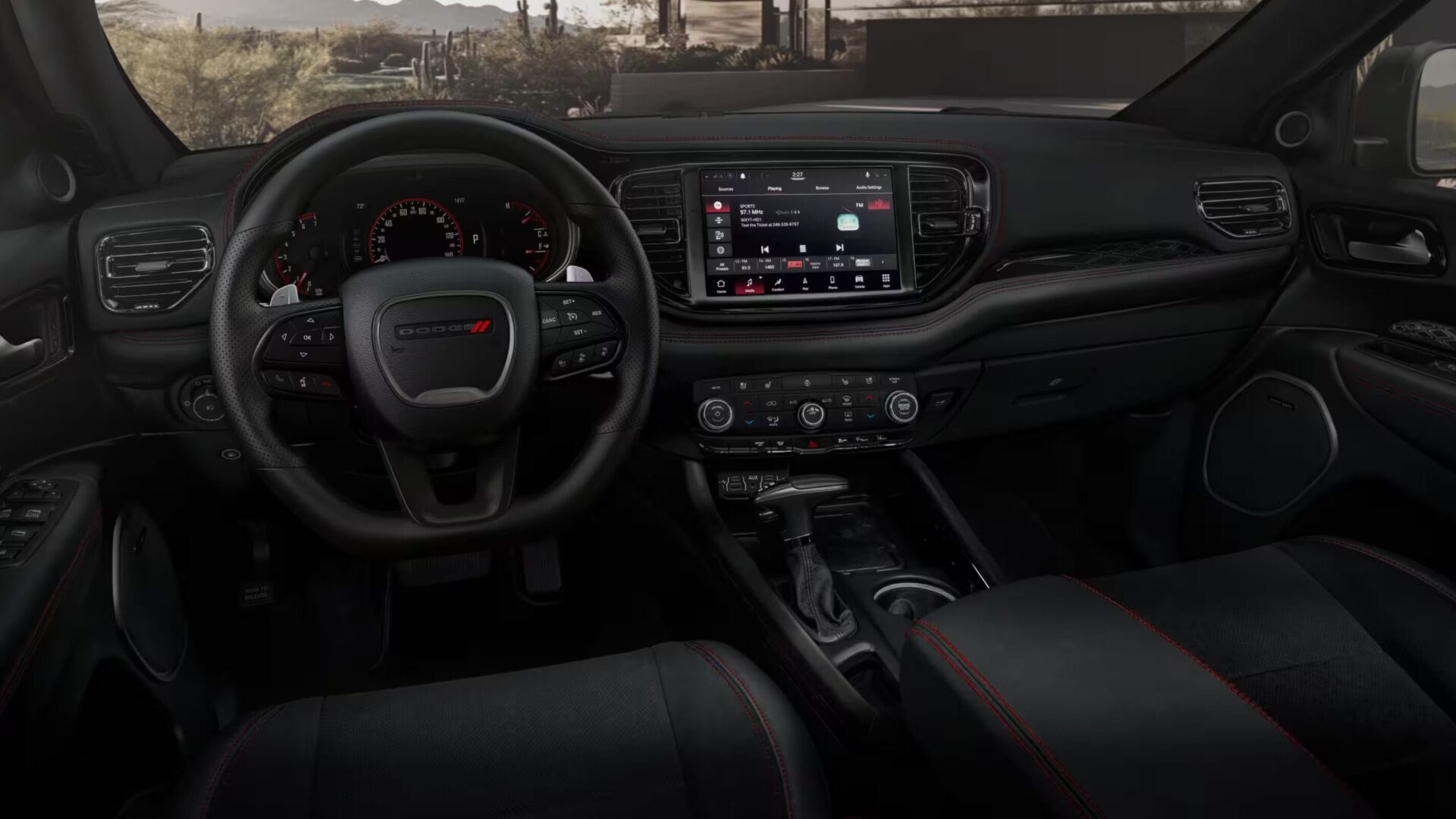
Dodge has improved the in-cabin tech on the SRT Hellcat, but it feels subpar by modern standards. The infotainment still runs on U-Connect 5, albeit smoothly, and the functions are pretty easy to find. Wireless connectivity is possible with the standard Bluetooth, WiFi, Android Auto, and Apple CarPlay. The standout modern feature is the addition of the Alexa Voice Control for hands-free access to media and other basic functions.
There’s little to excite owners in the safety tech department as well. Blind Spot Detection Warning and Lane Keep Assist are standard. Drivers also get Parking Assist and Automated Emergency Braking, but for an SUV with such a price tag, driver assist features should be more than basic.
Trims and Prices
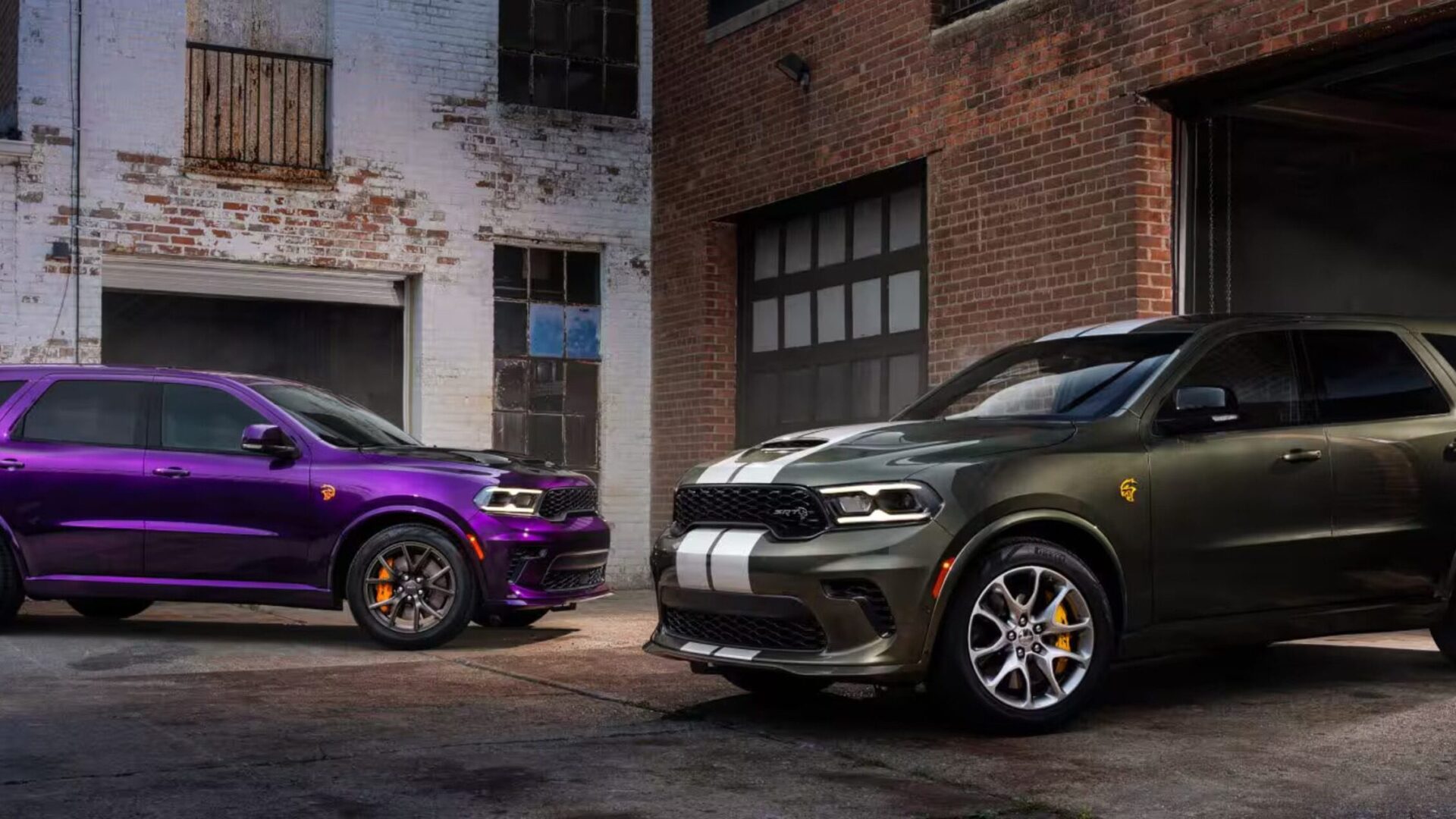
The 2026 Dodge Durango SRT Hellcat comes in two variants: the standard Hellcat and the Jailbreak edition. Although both share the same performance hardware, the Hellcat Jailbreak provides many customizations, ranging from paint options to interior setup. Both stand out in the lineup as the muscular versions of the Durango, even though Dodge has now equipped the GT and GT Premium with V8 engines.
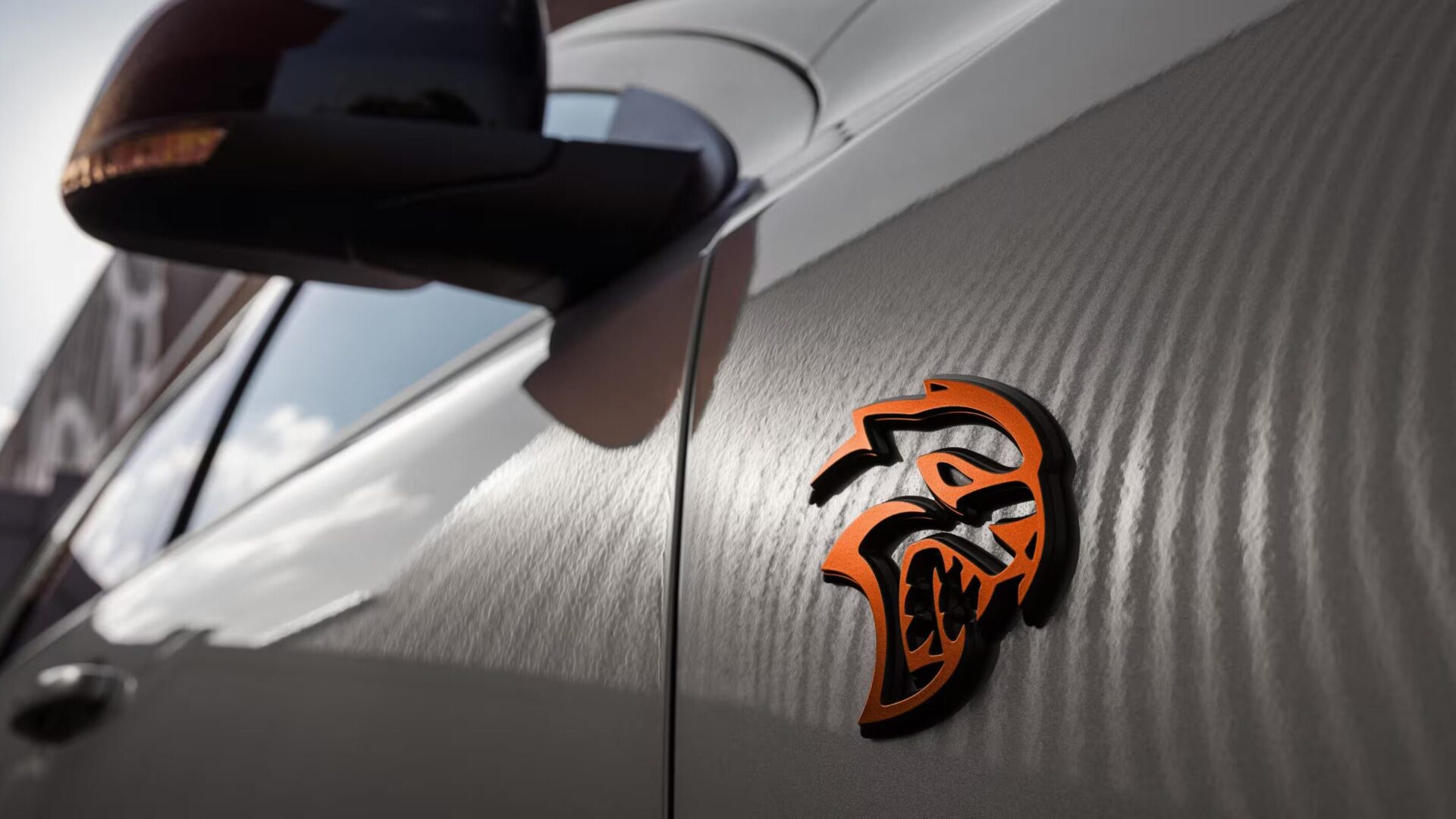
Official quotes put the Hellcat’s MSRP at $79,995. A bit pricey, considering that rivals like the Hyundai Palisade and Mazda CX-90 peak at around $60,000. The Jailbreak variant can climb as high as $100k if fitted with all the customization features needed to make it look stylish. That said, anyone who appreciates the kind of ride quality delivered by a 710-hp engine probably won’t flinch at the price.
Durango SRT Hellcat vs Rivals
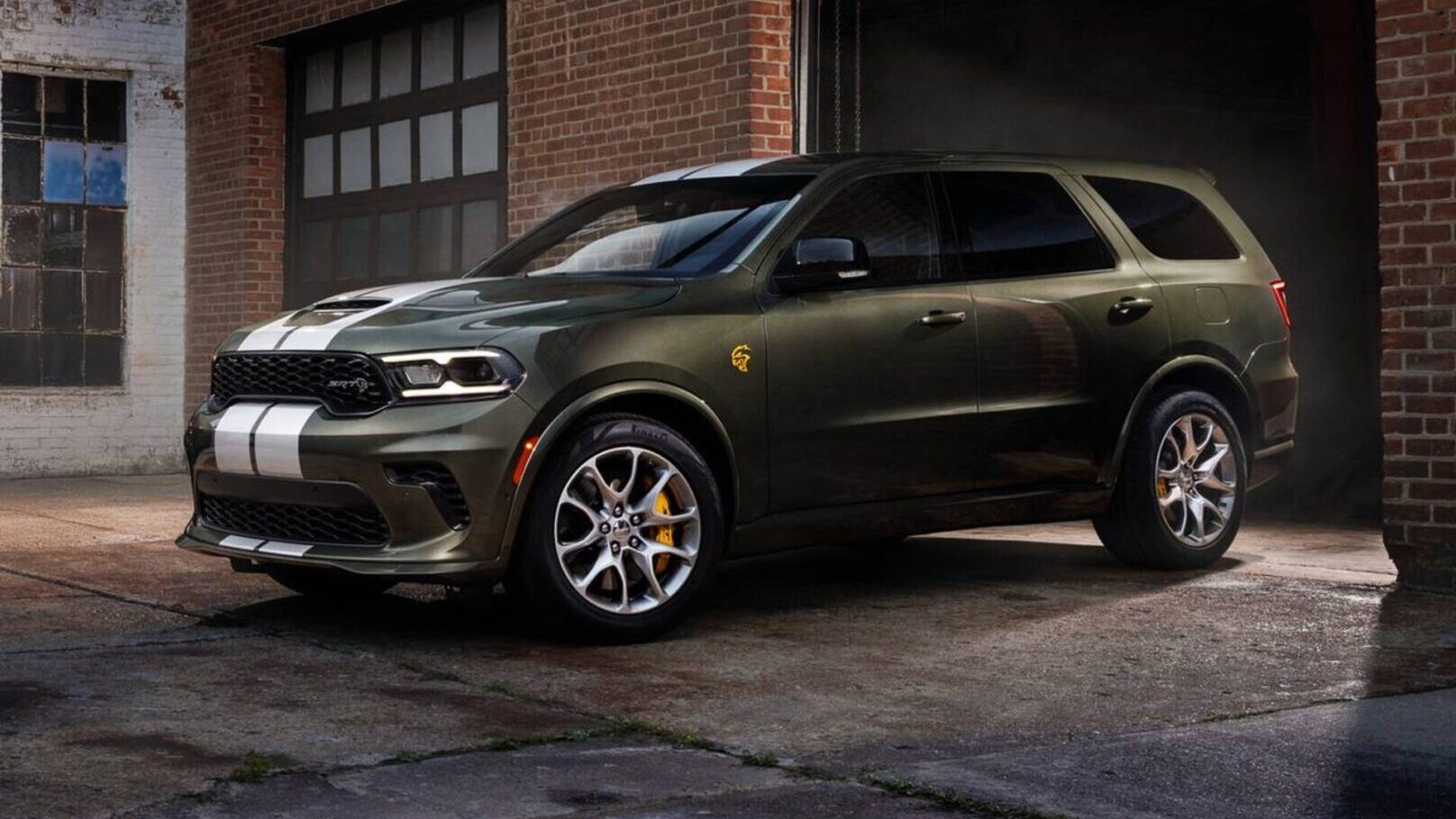
It’s hard for a 710-hp three-row luxury SUV to find a rival, really. The Durango occupies a niche segment, and that probably explains why Dodge has been unbothered about making serious changes to the design since 2011. Other midsize SUVs like the Kia Telluride and Mazda CX-90 look fancier and undersell the Durango by miles, but they’re nowhere near when the metric is performance. Even the Audi SQ 7 with a reputation for high performance taps out at 500 hp.
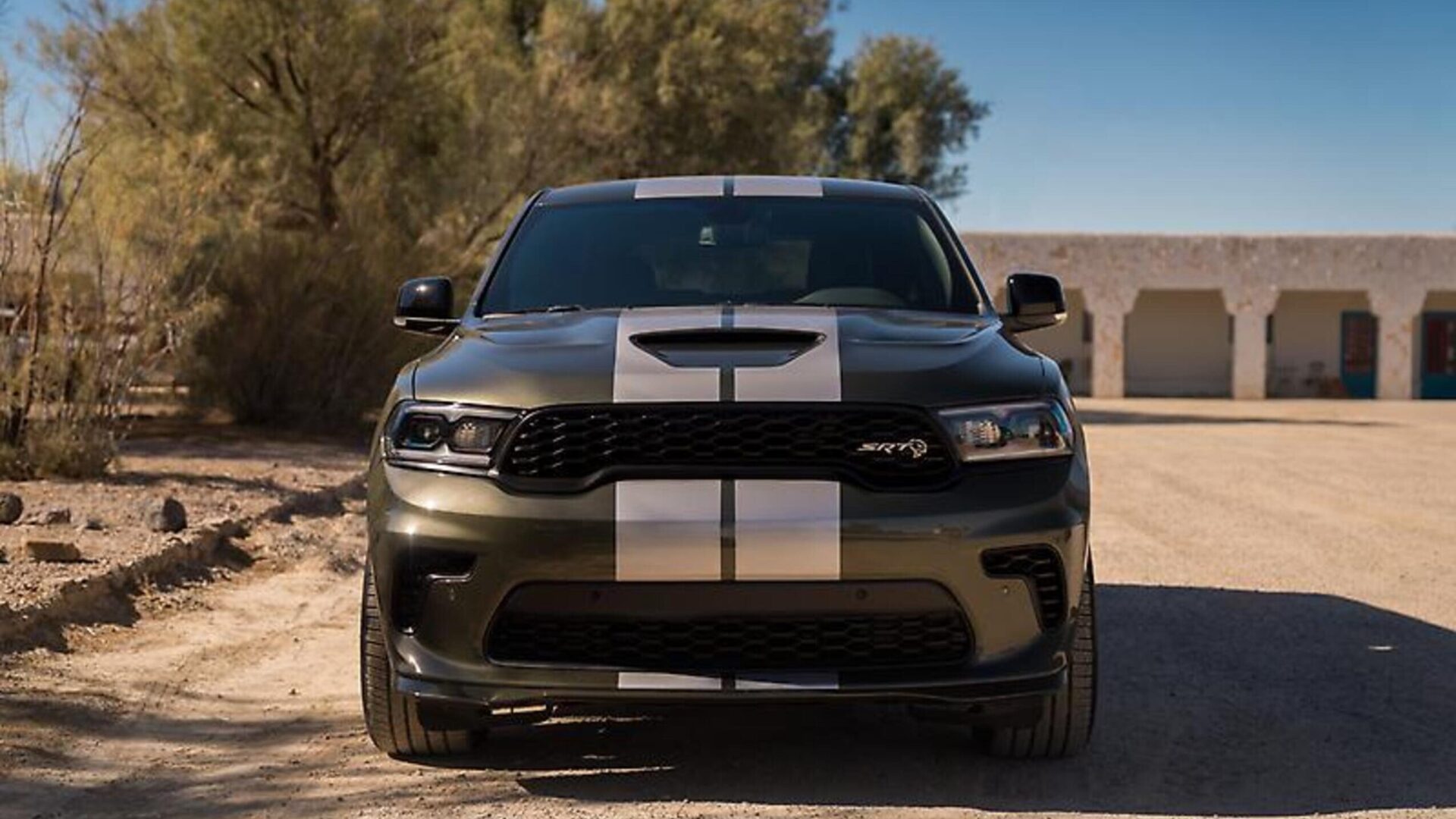
A major setback with the 2026 Dodge Durango SRT Hellcat is that too many features are locked behind optional packages, and they don’t come cheap. In the end, drivers have to pay so much to get the Hellcat to their taste, not to mention the stressful adventure of sifting through countless add-ons.

